

Idaho lets billion-dollar tech companies skip sales tax on their data centers with no end date.
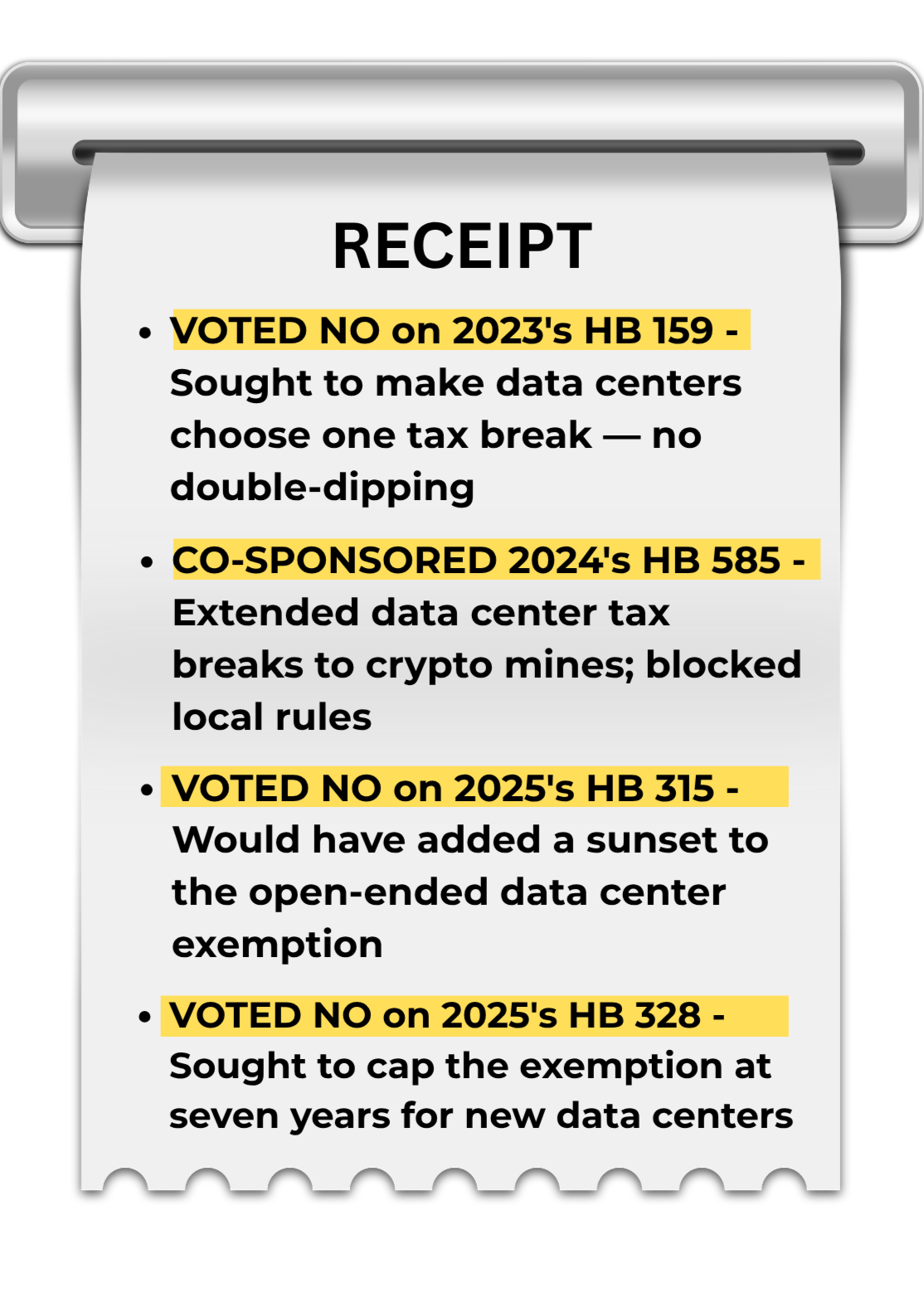
Even Republicans in the Legislature have tried to fix it: a seven-year limit, a rule against double-dipping on tax breaks. Dustin Manwaring voted against every single one of those common-sense reforms. Meanwhile, Pocatello schools are struggling for funding and your family's power bill keeps climbing. Big Tech should pay its fair share into the communities that host it, not skip the bill entirely while we pay more.
He sold the tax break and families got the bill.
In 2022, Manwaring championed Idaho's data center sales tax exemption, promising Idahoans it would bring more than $600 million into the economy at a cost of just $18 million. What he didn't say: the exemption has no expiration date, and a national study now finds most states don't even track what these giveaways cost them.
Working families in Pocatello should not be forced to pay more so the world's richest corporations can pay less. Mary Shea will make data centers pay their fair share, so you get a fair deal.
Utilities warned him. He didn't listen.
When a data center plugs into the grid, the utility builds new power lines and substations — and those costs show up on household electric bills. Utilities raised exactly that concern in 2024. Manwaring co-sponsored HB 585 anyway, a bill to extend data center tax breaks to crypto mines and block local communities from setting their own rules for them.
Whose side is he on?
In February 2026, while sponsoring a bill to let Idaho's government use stablecoin, Manwaring attended a conference at Mar-a-Lago where a lobbyist for the Trump family's crypto venture — which sells its own stablecoin — picked up his tab.
Mary Shea’s Promise
If a data center creates the cost, the data center pays the cost. Mary Shea will fight to put an expiration date on Big Tech's tax break, stop the double-dipping, and make sure grid upgrades for data centers are paid by the companies that need them — not by Pocatello families.